All posts by

Synergy of HYDRA and PNU-OpenLab

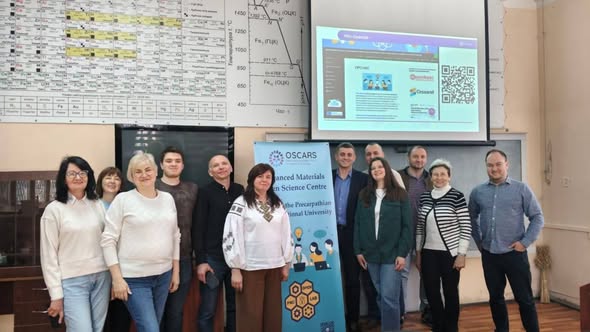
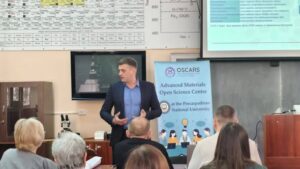
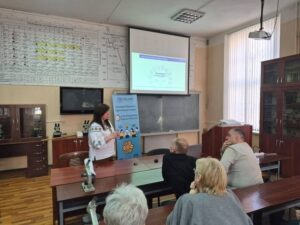
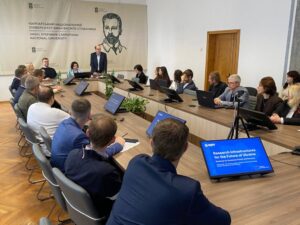
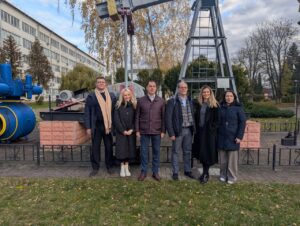
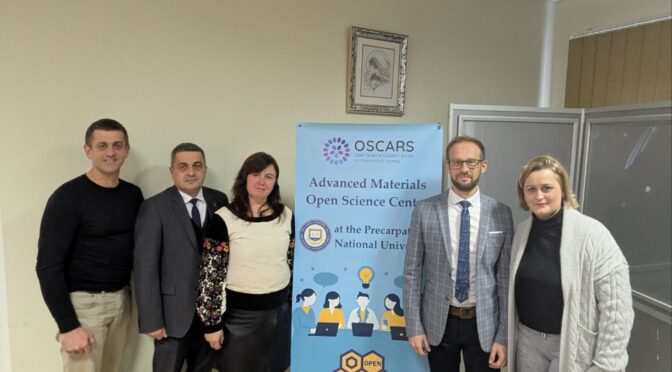
The project team of “Advanced Materials Open Science Centre at the Precarpathian National University” (HORIZON-INFRA-2023-EOSC-01-01, 2024–2026, https://oscars-project.eu/projects/pnu-openlab-advanced-materials-open-science-centre-precarpathian-national-university⁠), led by the Head of the Department of Applied Physics and Materials Science, Volodymyr Kotsyubynskyi, took part in a joint workshop with the winners of the second OSCARS call — the HYDRA project team from Lviv Polytechnic National University, led by the Head of the Department of Materials Science and Engineering, Andrii Trostyanchyn (https://lpnu.ua/en/news/researchers-department-materials-science-and-engineering-win-eu-oscars-grant-hydra-project⁠).
The HYDRA project team brings together specialists in materials science, solid-state physics, thermal analysis, as well as research data management and open science, ensuring an interdisciplinary approach. The event took place in Lviv at the Department of Materials Science and Engineering, Lviv Polytechnic National University (https://lpnu.ua/en/mse⁠), and was dedicated to strengthening collaboration in open science, materials science, and research infrastructure.
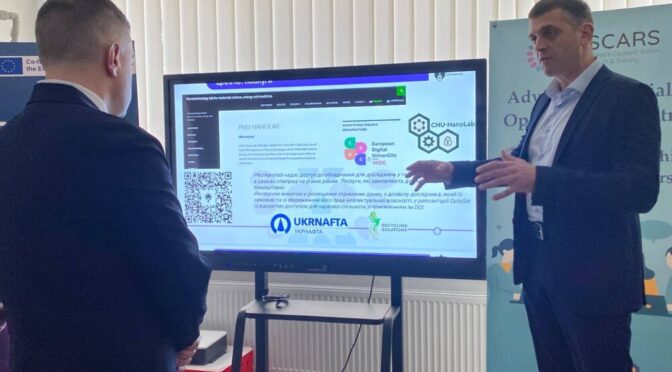
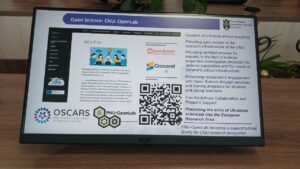
During the workshop, participants discussed the development of open science practices and the integration of Ukrainian initiatives into the European research ecosystem; partners’ involvement in the PNU-OpenLab platform (https://open-lab.cnu.edu.ua) as a tool for open science services; opportunities for shared use of research infrastructure, including CNU-NanoLab equipment and the laboratory facilities of the Department of Materials Science and Engineering, Lviv Polytechnic National University; and the exchange of experience in research data management and the implementation of the FAIR principles.
Particular attention was given to the publication of HYDRA project research results in the open repository CNU-DataSet (https://dataset.cnu.edu.ua), which is considered a shared platform for the storage, dissemination, and reuse of research data.
The workshop marked an important step in fostering inter-institutional collaboration between leading Ukrainian research centres in the field of materials science and confirmed the readiness of the parties for joint participation in international initiatives aimed at advancing open science and research infrastructure.
Joint activities within the OSCARS programme (https://oscars-project.eu) and Horizon Europe open up new opportunities for integrating Ukrainian researchers into the European Research Area and contribute to the establishment of sustainable partnerships in the fields of advanced materials and data-driven science.

Сertificate of technical competence

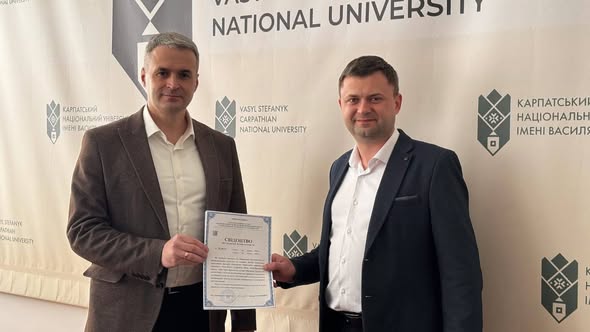
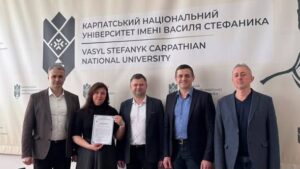
On 18 March 2026, the Laboratory of Nanotechnologies for Materials Science, Energy and Medicine (CNU-NanoLab, https://nano-lab.cnu.edu.ua) at Vasyl Stefanyk Carpathian National University officially received a certificate of technical competence. The document confirms that the laboratory complies with the requirements of ISO 10012:2005 “Measurement management systems” and verifies its ability to ensure an appropriate level of accuracy and reproducibility of measurements in scientific research.
The certificate was presented with the participation of the University’s Vice-Rector, Vitalii Shkromyda; Acting Director General of the Ivano-Frankivsk Scientific and Production Centre for Standardisation, Metrology and Certification, Vitalii Malisevych; Chief Metrologist, Yaroslav Maksymiv; and members of the project team “Advanced Materials Open Science Centre at Precarpathian National University”, Volodymyr Kotsiubynskyi and Volodymyra Boichuk.
The award of the certificate represents an important outcome of the project implemented under the Horizon Europe programme (HORIZON-INFRA-2023-EOSC-01-01, 2024–2026) and marks the logical completion of the certification phase of the CNU-NanoLab infrastructure. For the first time, a laboratory of Vasyl Stefanyk Carpathian National University has been certified in accordance with a European standard, confirming its compliance with modern requirements for research infrastructure.

Start 2nd OSCARS AGM

The 2nd OSCARS AGM will start on March 10, which will be a platform for discussing the results of the implementation of projects funded by the OSCARS project.

Merry Christmas!

The staff of the Center sincerely wishes you peace, faith, and prosperity. May the Christmas light warm your hearts, give you strength and hope, and may love, harmony, and the support of loved ones reign in every home.

We express our deep gratitude to the soldiers of the Armed Forces of Ukraine for their courage, resilience, and daily defense of our country. Thanks to you, we have the opportunity to work, teach, advance science, and preserve Ukrainian traditions.

Christ is born! Let us glorify Him!

Visit by the Deputy Minister of Education and Science of Ukraine

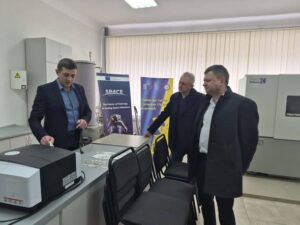
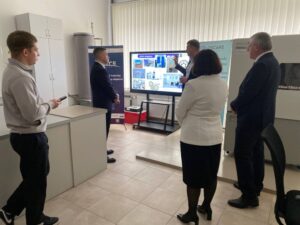
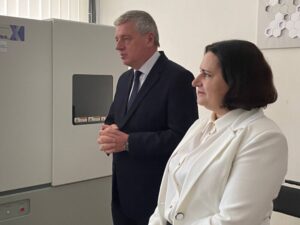
Today, Professor Mykola Trofymenko, Deputy Minister of Education and Science of Ukraine, paid a working visit to Vasyl Stefanyk Carpathian National University. He familiarised himself with the activities of the Center for Open Science in Modern Materials Science at Vasyl Stefanyk Carpathian National University and the Department of Applied Physics and Materials Science of the Faculty of Physics and Technology.

At the Center for Open Science in Modern Materials Science, the guest was presented with the institutional repository of open research data, the main directions for implementing open access policies and the FAIR principles, as well as examples of how the university’s students and researchers publish the results of their work in an open format. Particular attention was paid to the importance of open science for the integration of the university into the European Research Area, increasing the transparency of research and expanding opportunities for international cooperation.

At the Department of Applied Physics and Materials Science, Mykola Trofymenko was introduced to the teaching and research laboratories, modern measuring and experimental equipment, as well as the key research areas developed by the staff and postgraduate students. The discussion focused, in particular, on the development of new functional materials for energy and electronics, as well as on involving students in real scientific and innovation projects. During the visit, the importance of combining strong fundamental training with practice-oriented competences and dual forms of education was emphasised.

S3 School

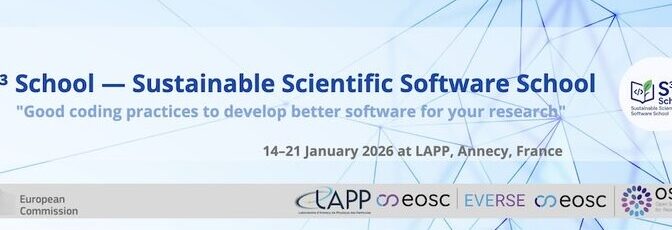
Are you a researcher, a scientist, or a Research Software Engineer (RSE) aiming to acquire new skills to build sustainable, open, and reproducible research software following recognised best practices? 

Register now for the S3 School – Sustainable Scientific Software School. Good coding practices to develop better software for your research, a one-week training programme designed to teach good and modern coding practices tailored for scientific software development. 

The event will take place from 14 to 21 January 2026, at LAPP in Annecy, France.

RIFF project

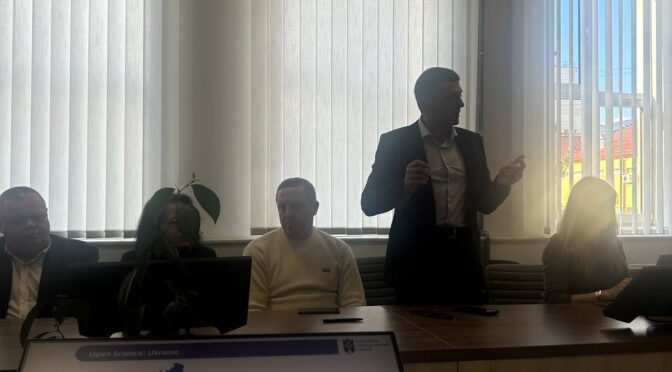
On 29 October at Carpathian National University (CNU) a roundtable gathered the RIFF project coordinators and representatives of CNU’s research infrastructures to discuss recovery-oriented road-mapping for Ukrainian RIs and the practical uptake of Open Science.

Guests included Ondřej Gradil, Head of Research Infrastructure at Masaryk University and coordinator of RIFF; Ricardo Miguéis, Head of the Brussels Office of Portugal’s largest RTO (INESC) and a researcher with 20 years’ experience; and Liudmyla Tautieieva, policy analyst for the OECD, UNECE and the Centre for Innovation Systems of the European Future.

Presenting “Open Science & FAIR at CNU: From Policy to Practice,” OSCARS PNU-OpenLab coordinator Prof. Volodymyr Kotsyubynskyi showcased CNU’s ecosystem: the CNU-OpenLab programme and the multidisciplinary DataSet institutional repository built on InvenioRDM; the in-house software that converts InvenioRDM metadata to Crossref-ready XML (to be shared under the MIT License); open access to PNU-NanoLab facilities for collaborative research with data deposition and DOI assignment; citizen-science cooperation with SaveDnipro (e.g., the radiation station on Mount Pip Ivan); national capabilities such as the Mössbauer spectroscopy lab; two Diamond Open Access Scopus journals; and the university’s COARA-aligned assessment model (70% qualitative excellence/impact/implementation, 30% quantitative metrics). The discussion highlighted how RIFF’s ESFRI-style peer-reviewed roadmap, combining bottom-up calls and top-down consultations, complements CNU’s OSCARS-backed actions that connect Ukrainian RIs with the European Research Area through Community-based Competence Centres and Composable Open Data and Analysis Services, training for RI managers, and mobility/knowledge-exchange schemes.

Participants underlined that Open Science is not a slogan but critical infrastructure for Ukraine: it accelerates rebuilding and resilience, enables trustworthy, reusable data for energy, environment and security challenges, lowers duplication costs amid constrained budgets, strengthens international collaboration and visibility, and equips the next generation of Ukrainian scientists and engineers with FAIR-by-design practices that turn research into real-world solutions.

https://www.facebook.com/share/p/1BaxtsJAnN/

https://www.linkedin.com/posts/pnu-openlab_oscarsprojects-openscience-dataset-activity-7389908826331750400-t8Pz?utm_source=social_share_send&utm_medium=android_app&rcm=ACoAAA8DDIkBgJr4jaX69c0IjYRK-CeOwP7jqgw&utm_campaign=copy_link

https://bsky.app/profile/pnu-openlab.bsky.social/post/3m4htp7m6mk26

https://www.instagram.com/p/DQdq55eiF3h/?igsh=MWZtcmp5czVyY2s5bg==

Current Issues in Improving the Quality of the Educational Process

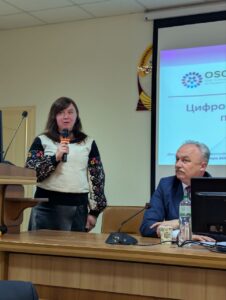
On October 10, 2025, within the framework of the International Scientific and Methodological Conference “Current Issues in Improving the Quality of the Educational Process,” organized by Ivano-Frankivsk National Medical University, Volodymyra Boichuk, Professor at the Department of Applied Physics and Materials Science of Vasyl Stefanyk Carpathian National University, delivered a talk entitled “Digital Open Data Platforms: Challenges and Prospects.” The presentation outlined CNU’s experience in implementing the National Open Science Plan: ensuring open access to research outputs and scientific–technical information; open access to research infrastructure; creating conditions for effective work with publicly available data and infrastructure assets; promoting science and advancing citizen science; improving systems for assessing scientific and R&D performance; and raising awareness and building competencies in open science across the academic community. The talk drew on results from the OSCARS project (Horizon Europe, https://oscars-project.eu/about-oscars), aimed at consolidating European research infrastructures (on and beyond the ESFRI roadmap) into interdisciplinary FAIR services and practices that directly support open science.
One of the core elements of the University’s research ecosystem is the institutional DataSet repository, which enables the deposition of datasets, preprints, articles, teaching materials, and code with DOI assignment and reuse in line with the FAIR principles, alongside the CNU-Nanolab infrastructure providing access to state-of-the-art materials science equipment. Work requested by researchers is carried out free of charge, and—subject to the requester’s consent—the resulting measurement data are deposited in DataSet with preservation of intellectual property rights. At the same time, PNU-OpenLab operates as an element of CNU’s research ecosystem that provides materials-properties investigation services for industry, which are important for the needs of the country’s critical infrastructure. The implementation of open science in Ukraine is strategically essential for transparency, reproducibility, and integration into the European Research Area, and the project “Open Science Center in Modern Materials Science at Vasyl Stefanyk Carpathian National University (PNU-OpenLab)” (https://open-lab.pnu.edu.ua/) is another step toward enhancing the quality of the scientific and educational process and strengthening Ukraine’s innovation capacity as part of the European research area.

As open as possible, as closed as necessary!

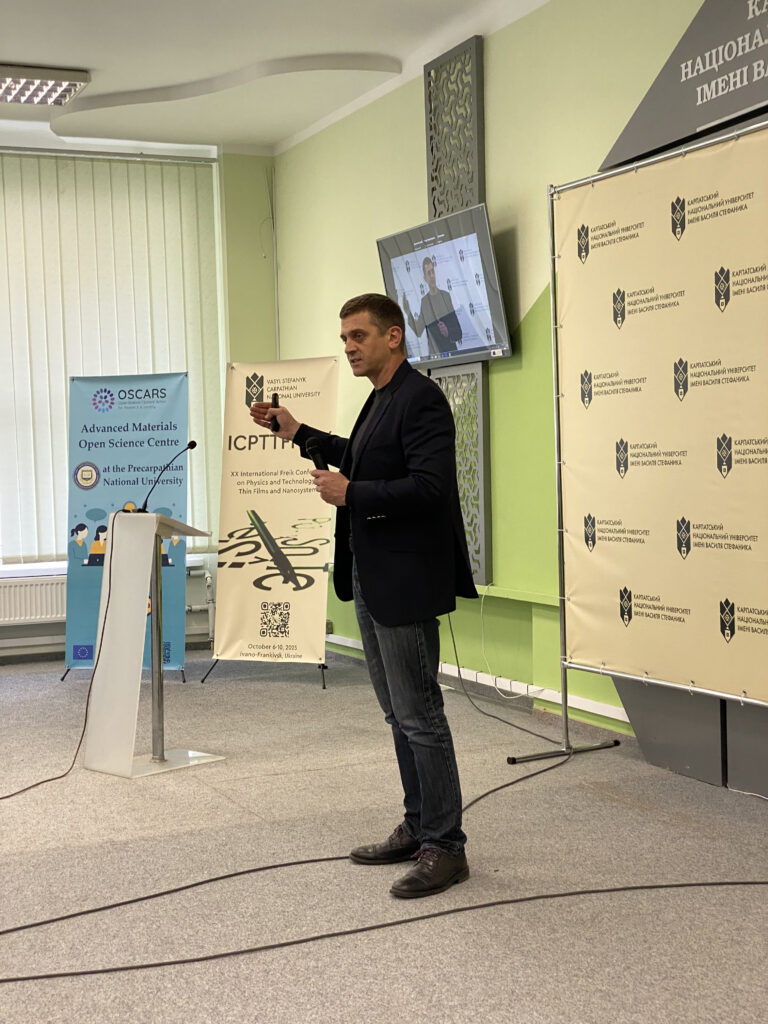
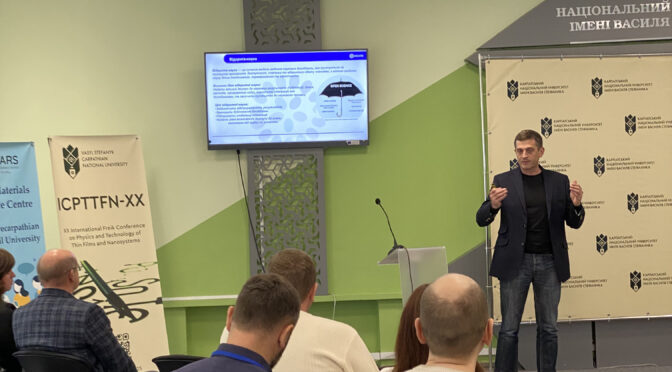
On October 9, 2025, at the 20th International Freik Conference on Physics and Technology of Thin Films and Nanosystems, Volodymyr Kotsiubynskyi (Vasyl Stefanyk Carpathian National University) delivered a talk on the University’s strengthening of its open science policy.

At the core of this ecosystem are the DataSet repository (built on CERN’s InvenioRDM) and the PNU-OpenLab research infrastructure, which provides access to state-of-the-art materials science equipment.

The University follows the principle “as open as possible, as closed as necessary,” balancing openness with responsible data stewardship and compliance with ethical and legal norms. University researchers and partners can deposit datasets, preprints, articles, teaching materials, and code with DOI assignment, ensuring citability and reuse in line with the FAIR principles.

Within PNU-OpenLab, collaboration at multiple levels and project-based work upon request (subject to available resources) are envisaged. Measurement data obtained (with the performers’ consent) are deposited in DataSet, increasing the visibility and reproducibility of results. Among the flagship facilities are the Gamma-Resonance Spectroscopy Laboratory (a national treasure of Ukraine) and other instruments for advanced materials characterization.

The ecosystem supports CNU’s engagement in European initiatives on research assessment reform (COARA) and aligns with Horizon Europe requirements, particularly regarding open access and research data management.

For inquiries about publishing in DataSet and accessing equipment, please contact PNU-OpenLab or the Department of Applied Physics and Materials Science at CNU.

Radnote radiation monitoring station

A Radnote radiation monitoring station has been installed on Mount Pip Ivan Chornohorskyi, one of the highest peaks in the Ukrainian Carpathians, standing at an altitude of 2,028.5 metres. This has been made possible through cooperation of Vasyl Stefanyk Precarpathian National University with NGO SaveDnipro and international partnerships with SAFECAST and Blues.

It is worth noting that a key advantage of the Radnote stations is their autonomous operation. They require neither a mains electricity supply nor a wired or Wi-Fi Internet connection. Radnote functions perfectly in standalone mode, powered by an integrated solar panel and transmitting data via the mobile network – a fact proven by its uninterrupted operation in the Chornobyl Exclusion Zone and during last year’s stabilisation power outages. Thanks to these features, Radnote is an ideal solution for remote locations such as Mount Pip Ivan. At an altitude of over 2,000 metres, winter temperatures often fall below -20⁰C, and wind speeds can exceed 50 km/h; everything is covered in thick layers of snow and ice for weeks or even months. For some radiation monitoring stations, low temperatures present a risk of malfunction. And now we have the opportunity to test the system under the most severe conditions. The mountain’s proximity of the station to the EU border makes it an important site for cross-border monitoring, which will contribute to data exchange and coordination efforts between Ukraine and the European Union.

Radiation data from Mount Pip Ivan can be viewed on the SaveEcoBot radiation map: https://www.saveecobot.com/radiation-maps#12/48.0695/24.6441/gamma/ara+arc+clua+cuc+crc

From the system, the data are automatically transmitted to Deepstatemap.live, Windy.com, and other platforms that integrate SaveEcoBot data. In particular, the system shares data with the official Ministry of Environmental Protection and Natural Resources platform “EcoThreat”, as well as with State Nuclear Regulatory Inspectorate, State Scientific and Technical Center for Nuclear and Radiation Safety, the National Security and Defence Council of Ukraine; it is also displayed on the website of the National Commission for Radiation Protection of the Population of Ukraine and published via the State Open Data Portal.

Furthermore, the data collected from the Radnote station on Mount Pip Ivan will also be published in the open data repository DataSet of Vasyl Stefanyk Precarpathian National University (established under the OSCARS project “Advanced Materials Open Science Centre at the Precarpathian National University – PNU-OpenLab”). These data are openly accessible and may be freely used by researchers, civil society organisations, and public authorities for scientific, environmental, and policy-related purposes. This is in line with the objectives of the Jean Monnet Module project “Radiation Safety: European-Ukrainian Approach”, which is being implemented at the Department of Applied Physics and Materials Science.

The online presentation of the partnership’s results featured Ihor Tsependa, Acting Rector of the Precarpathian National University, Volodymyr Kotsiubynskyi, Head of the Department of Applied Physics and Materials Science, Pavlo Tkachenko, co-founder of SaveDnipro, Head of IT and Chief Developer of SaveEcoBot (Dnipro), Azbi Brown, Lead Researcher at Safecast (Yokohama, Japan), and the university’s scientific community.

We sincerely thank Pavlo Tkachenko and Azba Brown for their valuable cooperation and contribution to the implementation of this important project for Ukraine. We thank the Armed Forces of Ukraine for the opportunity to work.